Alternatives to Adult Diapers for Bedridden Adults
Families caring for a bedridden adult can keep a better-fitting brief, use a brief as backup with another toileting option, or replace it for part of the day. An external collection device can help manage urine. Stool still needs its own plan, which may include assisted toileting, a bedpan, or an in-bed system designed to collect both urine and stool.
Start with the part of the day when briefs cause the most trouble. A brief that leaks before a home aide arrives calls for a different plan than one that contains stool but is difficult for one caregiver to change. You can review those situations separately with the care team.
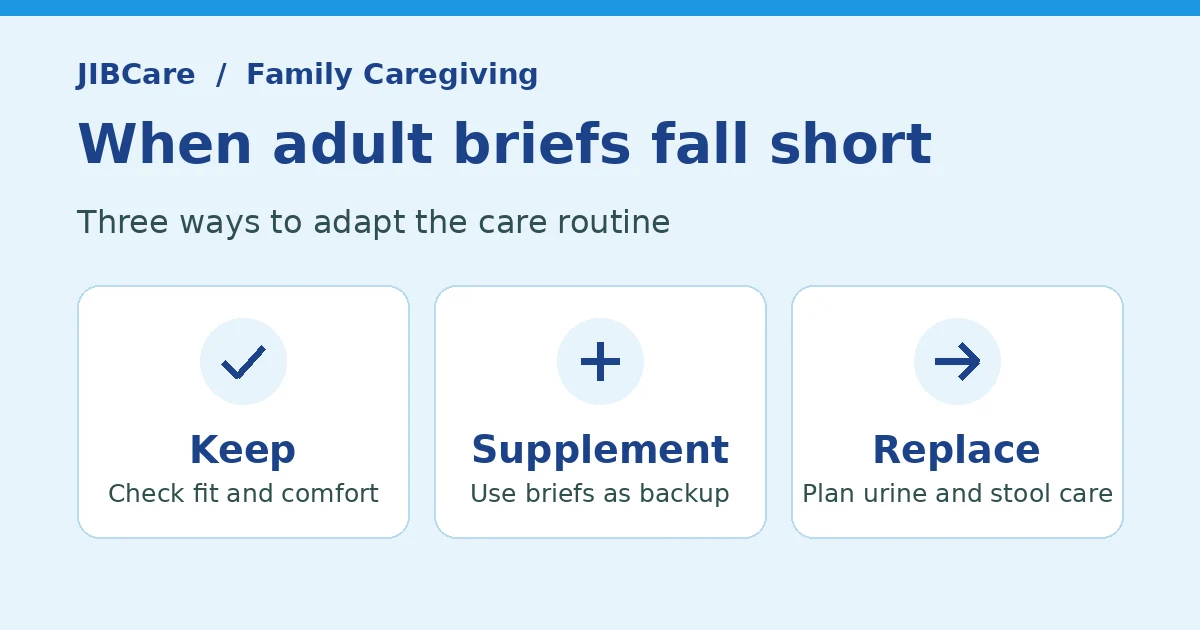
When does it make sense to keep, supplement, or replace briefs?
| Decision | When to consider it | What caregivers still do |
|---|---|---|
| Keep briefs | Briefs generally work, but fit, leakage, or the timing of changes is causing problems. | Review size and absorbency, check the brief, change it after soiling, and follow the skin-care plan. |
| Supplement briefs | Another method may cover a predictable care period or a specific need, such as urine collection or a planned bowel movement. | Help with toileting or collection, clean the equipment, and plan when to use a brief as backup. |
| Replace briefs for a specific period | The care team has helped identify an option for that period and a workable plan for both urine and stool. | Check comfort and skin, follow setup and cleaning instructions, and have supplies ready for leaks or equipment downtime. |
Keep briefs when the problem is fit or an occasional leak
Ask a nurse or continence specialist to review how the brief fits while the person is lying down and how it performs during their usual care routine. For urine leakage, pads or absorbent underwear may be an option if they suit the person's needs and are practical for the caregiver to change. An underpad can protect the bedding during a change or after a leak. The person still needs prompt hygiene after soiling and regular skin checks under their care plan.
Use a brief as backup when another option covers one part of care
For someone who can tell a caregiver when they need to go, consider whether assisted toileting can cover a predictable part of the day. A bedside commode requires a safe transfer and appropriate sitting support. A bedpan can collect urine or stool in bed when the person can tolerate placement and a caregiver can help. For the full range of options by mobility level, see JIBCare's home-care toileting guide.
If urine leakage is the main issue, ask whether a handheld urinal or an external urine collection device is appropriate. An external urine device collects urine after it leaves the body. It leaves bowel care to a separate routine. Before pairing a brief or pad with any device, check its instructions and ask the care team whether the combination is suitable.
Try a defined period without briefs when both care needs are covered
Start with a period when a trained caregiver is available, such as the hours a home aide is present. Decide how the person will signal discomfort or ask for help. Confirm who will check the equipment and skin, how cleanup will happen, and what to do if a bowel movement occurs when a urine-only device is in use. Keep a backup plan for rest breaks, laundry, or equipment downtime.
What should families compare before changing the routine?
Take a few notes during the usual care routine and bring them to the person's nurse or other clinician. A simple record can help distinguish a leakage problem from a positioning or staffing problem.
- What happened? Record urine, stool, or both, and when the current setup fell short.
- What help was needed? Note who was available, whether repositioning was comfortable, and which steps took the most effort.
- What mattered to the person receiving care? Ask about comfort, privacy, and whether they want to participate in any part of the routine.
- What would another option require? Compare setup, cleanup, supplies, laundry, and the backup plan before judging how practical it is.
Ask the care team about new leakage, persistent irritation, or broken skin. Follow the person's existing bowel, skin, and positioning plans. If the main concern is overnight care, see how to reduce nighttime brief changes and how to plan for urine and bowel movements at night.
When might automated in-bed toileting be worth exploring?
For a person who cannot safely get out of bed and needs substantial help with both urine and stool, an automated in-bed system may be an option to discuss with the care team. JIBCare offers the Curaco CareBidet for home care. Curaco designed it to detect and collect urine and stool, then wash and air-dry the area while the person remains in bed.
Caregivers still need to learn how to fit and monitor the system, clean it, handle supplies, and keep a backup plan. Ask the care team about individual suitability, comfort, and skin care. For equipment details, see how CareBidet works at home or book a call with JIBCare.
Can a family use briefs only as backup?
Yes, when the care team agrees that the main option covers the person's needs for that part of the day. Make a plan for urine and stool, and decide who will help if there is a leak, the person is uncomfortable, or the equipment needs cleaning.
Sources
- NIDDK guidance on protective products for urinary incontinence
- NIDDK guidance on bowel incontinence
- MedlinePlus guidance on skin care and incontinence
- MedlinePlus guide to external incontinence devices
- MedlinePlus bowel retraining and bedpan guidance
- Kingston and Richmond NHS guidance on bedside commodes
- Curaco CareBidet user manual